


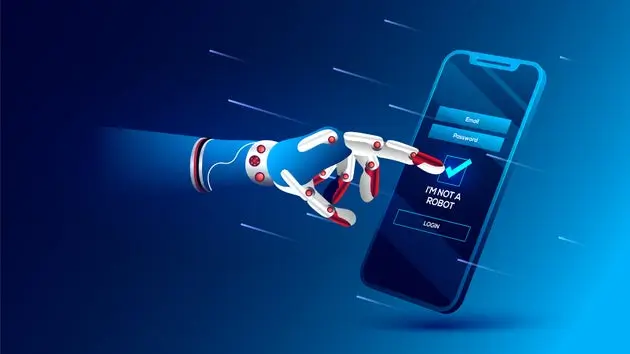
You’ve likely encountered it countless times—a small checkbox asking you to confirm, “I’m not a robot.” It’s a simple request, yet it plays a crucial role in our online world. But have you ever wondered why robots, or more accurately, bots, can’t just tick that box like we do? The answer lies in the sophisticated battle between website security and the ever-evolving capabilities of bots.
The Purpose of the “I’m Not a Robot” Checkbox
Before we dive into why bots can’t check the box, let’s first understand why this checkbox exists. This seemingly small feature is part of a larger system known as CAPTCHA (Completely Automated Public Turing test to tell Computers and Humans Apart). CAPTCHA was designed to prevent automated software—commonly referred to as bots—from accessing websites in ways that only humans should. These could be creating fake accounts, spamming comment sections, or buying up limited-edition products faster than any human could.
Read more – 10 Ways to Boost Your Immune System Naturally
The checkbox, specifically, is part of a newer system known as reCAPTCHA, developed by Google. The reCAPTCHA is designed to determine whether the entity interacting with the website is a human or a bot. By asking users to tick the “I’m not a robot” box, the system collects subtle behavioral cues. This helps differentiate between human and bot activity.

How Does reCAPTCHA Work?
When you click the “I’m not a robot” checkbox, you might think it’s just a simple action, but in reality, the system is analyzing your behavior in the background. Here’s what happens:
- Mouse Movements: Humans naturally move the mouse in subtle, often irregular patterns before clicking on the checkbox. Bots, on the other hand, tend to move in straight lines or in ways that lack the randomness of human interaction.
- Time Taken: Humans usually take a few moments to position the cursor and click. Bots, being programmed for efficiency, might do this almost instantaneously, raising a red flag.
- Click Patterns: The system also looks at how and where the click occurs. For example, if the click happens too perfectly centered every time, it might indicate a bot.
If the system suspects you might be a bot based on these factors, it may prompt you with additional tests. These test could be such as identifying objects in images or solving a puzzle. This further ensures that only real humans can pass through.
Why Bots Can’t Fool the System
Now, you might wonder, “Why can’t bots just mimic human behavior to pass the test?”. The answer lies in the complexity and constant evolution of reCAPTCHA technology.
- Sophisticated Algorithms: reCAPTCHA uses advanced algorithms that are regularly updated to detect and adapt to new bot strategies. Even if a bot can simulate mouse movements or take a delay before clicking, the algorithms can often spot these as artificial.
- Machine Learning: Google’s reCAPTCHA is built on machine learning, which means it gets smarter over time. It learns from millions of interactions every day, constantly improving its ability to distinguish between humans and bots.
- Human-like Behavior is Hard to Fake: The nuances of human behavior, such as how we hesitate, the way we drag our mouse, or even how quickly we recognize a picture of a bus, are incredibly hard to replicate perfectly. Bots might be able to mimic some aspects, but the overall behavior still often lacks the depth and variability of a real human.
The Ongoing Battle: Security vs. Bots
The development of CAPTCHA and reCAPTCHA is a part of the ongoing battle. This is to keep the internet safe from malicious bots. As bots become more sophisticated, so too must the tools we use to detect and block them. It’s a continuous cycle of advancement on both sides, but for now, reCAPTCHA remains a robust tool in keeping automated programs at bay.
Wrapping Up
The next time you’re asked to check the “I’m not a robot” box, you can appreciate the technology at work behind the scenes. It’s a small action on your part, but it’s a crucial step in maintaining a secure, user-friendly internet experience. While bots are getting smarter, they still struggle to replicate the complexity of human behavior—especially when it comes to something as simple, yet intricate, as clicking a checkbox. So, in a world where automation is everywhere, it’s nice to know that there are still some things that only humans can do!


Be the first to write a comment.