


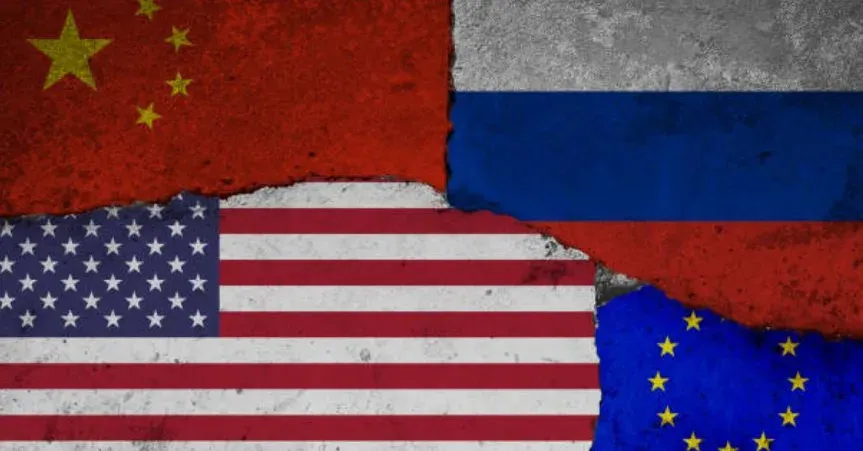
In the grand theatre of history, where mustachioed monarchs and philosophers in powdered wigs once held center stage, the 20th century stepped up with a dash more drama—a tension-filled narrative known as the Cold War. Picture this: a global chess match, where pawns were nations, moves were strategic alliances, and the battleground spanned from the frigid Arctic to the sultry Tropics, encompassing realms of ideology, economy, and, occasionally, the cosmos.
The Curtain Rises: Setting the Stage
The Cold War’s origins trace back to the rubble-strewn aftermath of WWII—a rare occasion where “the enemy of my enemy is my friend” proved a sagacious survival strategy. Fascism was vanquished, but a new frenemy emerged: the ideological schism between the capitalist allure of the United States (cue in Hollywood glamour and apple pie) and the communist utopia envisioned by the Soviet Union (insert the hammer and sickle, with a backdrop of Red Square).
Read more – The Signing of the Magna Carta: Birth of Constitutional Governance
Just like an awkward family reunion, the Yalta Conference in February 1945, where the Allied powers met to discuss post-war arrangements, sowed seeds for future squabbles. Instead of garden parties and exchanged pleasantries, the Eastern Bloc fortified itself under Soviet influence, while Western Europe leaned into an embrace with American democracy. Spoiler alert: Nobody wanted to make the first aggressive move, but everyone felt the need to stockpile nukes. Handy.
Spy vs. Spy: Espionage and Intrigue
This chessboard wasn’t just about military might and diplomatic gala dinners—it was a playground for spies. The Cold War became the golden era for espionage with more coded messages than an escape room enthusiast’s wet dream. From the infamous exploits of the Cambridge Five to double-crossers like Aldrich Ames and Robert Hanssen, the Earth felt more like a John le Carré bestseller than the serene blue planet we’d like to believe it to be.
In this covert world, bonds were as complex as they were tenuous. NATO, led by the U.S., formed in 1949, prompting the USSR to respond with the Warsaw Pact in 1955. These blocs didn’t play nice—a passive-aggressive dance ensued across the Iron Curtain, creating a silent but lethal stalking game of nuclear deterrence.
The Spaces Between: New Frontiers
As if the Earth wasn’t thrilling enough, the Cold War catapulted geopolitical tensions into outer space. The launch of Sputnik in 1957 caused a global jaw-dropping moment reminiscent of reality TV’s most shocking episodes. The ensuing “space race” was not just about science—it was a proxy battlefield where pride and prowess were on display. And no narrative is complete without the icy stare-down between Apollo 11’s moon landing and the Soviet’s Luna landing attempts.
Crafty Detente: The Thaw That Wasn’t Exactly a Thaw
In the 1970s, after swings and roundabouts in the military and ideological seesaw, détente was introduced—a fancy French word implying a relaxation of tensions. Treaties like SALT I (Strategic Arms Limitation Talks) showcased an attempt to clear the air, with world leaders metaphorically sipping tea rather than volleying threats across oceans. Yet détente had all the makeup of a mispronounced French menu item—exotic but not entirely filling.
Beneath the smiles, mistrust bubbled, manifesting in proxy wars from Vietnam to Afghanistan. It was a bit like playing Whac-A-Mole, with geopolitical hotspots popping up rather inconveniently across continents. These crises further cemented the roles of the U.S. and the USSR as puppet masters in their constant bid to redraw the power map.
From Collapse to Cooperation: The Legacy of Cold War Alliances
When the Berlin Wall fell in 1989, it didn’t just topple a concrete behemoth—it symbolically closed the curtains on an era of bipolar world order, hinting at frosty friendships thawing under the heat of perestroika and glasnost (all shout-outs to Mikhail Gorbachev). As the Soviet Union disintegrated, new alliances blossomed, pivoting the global focus from East-West dichotomies to a more fragmented and multipolar political landscape. Who knew old rivals could become begrudging partners in the complex arenas of trade, technology, and climate change?
Final Thoughts: A Cold Chill in the Air
The Cold War continues to haunt our textbooks as much as it influences our modern relations. The chessboard has morphed, but vestiges remain: echoes in NATO’s continued relevance, whispers of espionage refashioned for the digital age, and space explorations relaunched under similar stars. The world now faces new tensions that make historians arch an eyebrow, commenting sagely, “Ah, but we’ve been here before.”
So next time you find yourself participating in global diplomacy at a dinner party (in the form of a heated monopoly game or intellectual entanglements over dessert), remember the Cold War—a time when titans tiptoed through technology, tenuous alliances, and tectonic shifts, reshaping the world with every move.


Be the first to write a comment.