


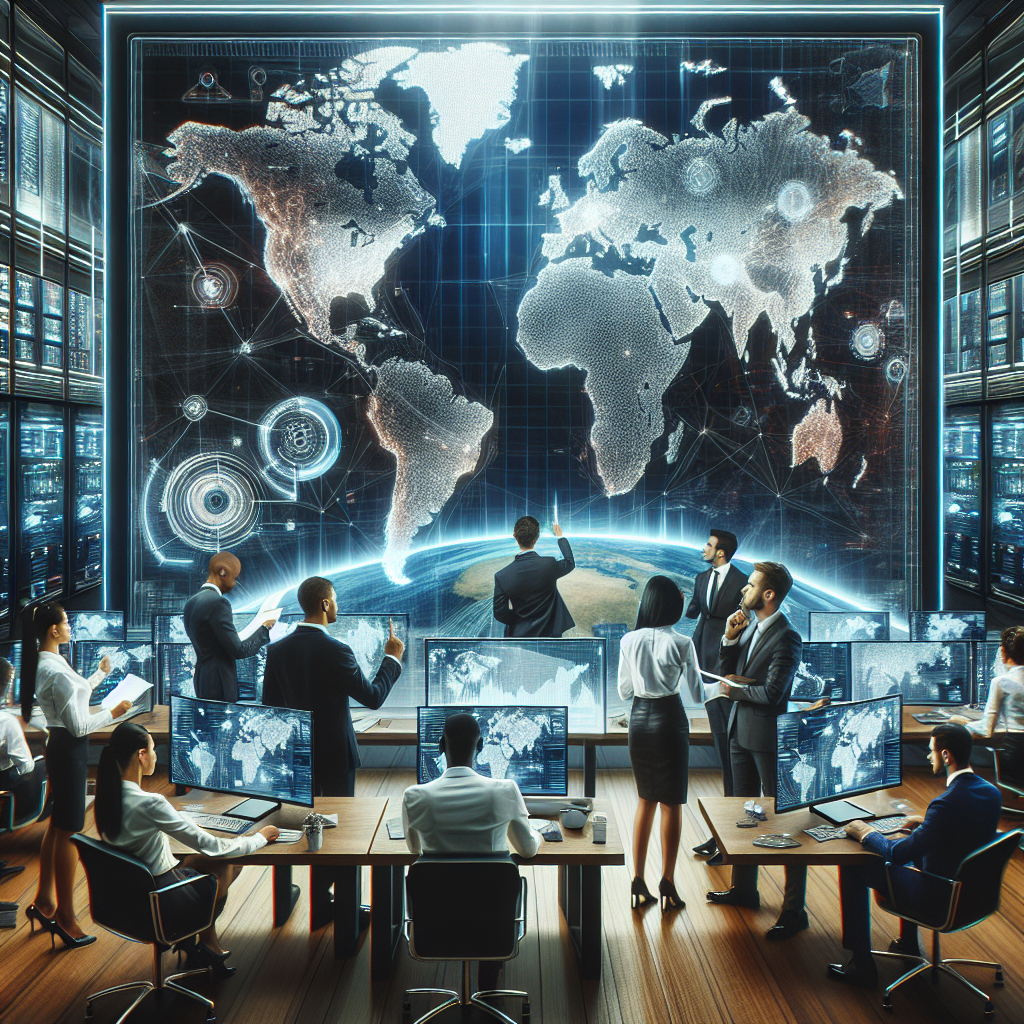
Ah, the digital age! A time when your refrigerator might be more intelligent than your dog, your phone talks back to you, and ordering pizza is so easy, it’s almost dangerous. As we live and thrive in this technologically-advanced playground, there’s a game of digital chess unfolding—a superpower competition far beyond the nostalgic Cold War narratives of yesteryear. Welcome, dear reader, to the Digital Revolution: a realm of 1s and 0s, where global power structures are morphing faster than you can say, “Artificial Intelligence.”
Read more – Daily Habits for Maintaining Healthy Skin and Hair
Chess, but Make It Digital
In days of yore, global dominance was a simpler affair. If you had a massive fleet, some fiery rhetoric, and perhaps a penchant for artillery, you’d be sitting pretty on the global stage. Today, power is a far more intricate tapestry woven with fiber-optic cables and a relentless tide of data. The players? The usual suspects—the USA, China, Russia—alongside a host of companies and hackers turning the world map into a binary-battlefield.
Let’s face it, James Bond villains of the old days wished they had access to the kind of technology our world powers wield. Sure, they had lasers and secret lairs, but would Dr. No have stood a chance against the algorithms and cybersecurity mainframes of modern-day superpowers? Unlikely.
The Cyber Colosseum
Today’s superpower competition is no longer about territorial conquests and political shows of strength. Instead, it’s about who can dominate the digital space—who can lay claim to cyber supremacy. We’re talking about a cyber colosseum where battles are fought silently, in milliseconds, beneath the veneer of cyberspace.
Cybersecurity: Remember the days when strong locks and vaults kept your secrets safe? Now, it’s all about firewalls, encryption protocols, and whatever dark magic cybersecurity analysts conjure on a daily basis. Cyberattacks have become the modern siege towers, breaching defenses at the speed of light, with superpowers employing sophisticated hackers to wage silent wars against one another.
Artificial Intelligence: Once a sci-fi dream, AI is now the crown jewel in the digital arsenal of superpowers, with countries investing billions in research and development. Think of AI as the strategic advisor to Caesar, capable of predicting moves, identifying patterns, and sometimes getting a bit too fond of doodling adorable cats (we see you, neural networks).
The Data Dilemma
Data is the new oil. No, scratch that—it’s more like the new nuclear weapon: immensely powerful, potentially dangerous, and constantly monitored by international watchdogs. Countries are scrambling not just to collect data, but to protect it from this newfound spy novel where everyone is trying to outwit each other’s digital fortresses. The result? A swirling morass of data privacy concerns and geopolitical tensions, as seen in debates over tech behemoths like TikTok, Huawei, and Google.
An Economic Tug-of-War
In the golden days of power politics, having an empire that stretched over continents and across oceans was the ultimate status symbol. Today, a thriving technology sector is the modern-day empire. The US and China have been embroiled in a digital tug-of-war to see who can not only develop cutting-edge technology fastest but also disseminate it globally.
Meanwhile, countries like India, South Korea, and Germany are playing dark horses, investing heavily in their tech sectors to carve out their own slice of the digital pie. Watch out, as this economic ballet is known to disrupt traditional power blocs faster than you can upgrade your smartphone.
Navigating the Digital Future
As we surf this digital wave, what’s the takeaway from this new age of superpower competition? For one, it’s changing the very fabric of international relations. The need for global cooperation has never been more crucial, yet the competitive edge continues to spark rivalry. Sharing technology while protecting national interests is a high-wire balancing act that will define the coming decades.
In the end, the digital revolution might not have given us jetpacks (yet!), but it has certainly recalibrated the scales of global power. So here’s to hoping we’re all savvy surfers on this wave of change, dodging the sharks and catching the best swells, as our world leaders grapple with the complexities of a digital future. Whether this competition will lead to a harmonious global dance or a cyber dystopian stumble remains to be seen—but one thing’s for sure: it’ll be one heck of a Wi-Fi connection.


Be the first to write a comment.